Japanese Media Interview with a Renowned Physician: “The Current Status of Late-Stage Healthcare in Japan”
Shin-Yokohama Kato Clinic’s Integrated Approach
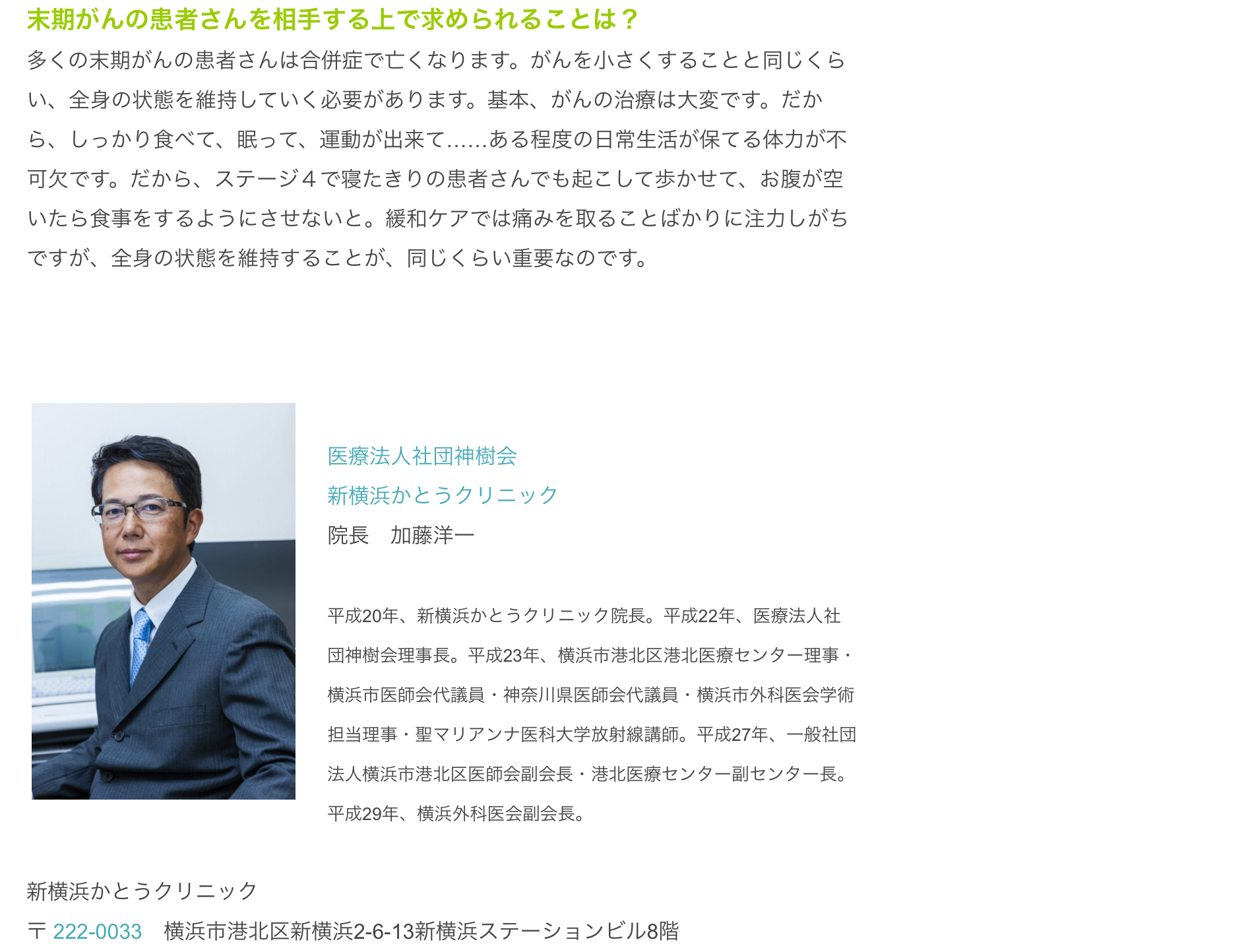
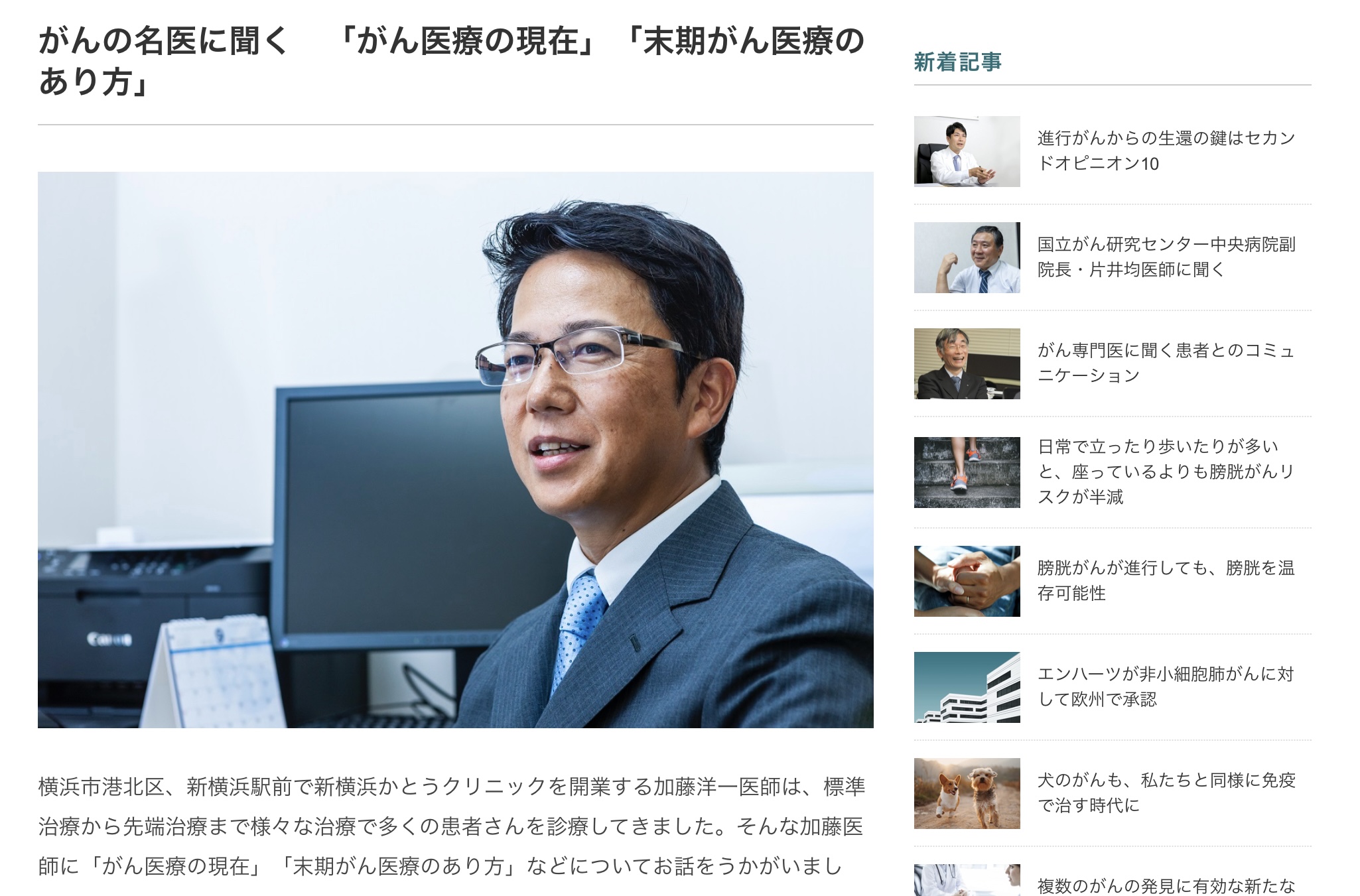
Led by Dr. Yoichi Kato, Shin-Yokohama Kato Clinic in Yokohama’s Kohoku Ward near Shin-Yokohama Station offers both standard and advanced therapies to numerous patients. We discussed the realities of late-stage healthcare and more with Dr. Kato.
Progress in Cancer Treatment: The Era of Personalized Therapies
“Cancer treatments have been advancing rapidly, with personalized therapy emerging to tailor optimal care for each patient. What do you see as the most significant change recently?”
Traditionally, cancer treatment options were dictated by the cancer’s location, its stage, and the patient’s prior treatment history. However, these conventional approaches have certain limitations. Increasingly, we are focusing on cancer’s underlying causes—such as immune function and genetic mutations—since cancer often develops when the immune system fails or specific genes mutate. The disease’s nature and treatment strategies both hinge on these genetic and immune factors. Moving forward, highly customized treatments selecting the best option for each patient will be at the forefront—a direction the government strongly supports.
The Significance of Genetic Screening & Existing Challenges
More and more genes have been identified as risk factors for cancer. Take lung cancer as an example: only about 1% of patients have a specific genetic mutation; however, for this group, there is a treatment method that proves effective in 80% of cases. Consequently, if a patient is diagnosed with cancer but does not undergo comprehensive genetic testing, they might miss out on the therapy most likely to succeed.
Another systemic shortfall comes into play when a drug with an 80% effectiveness rate lies outside public insurance coverage, forcing patients to pay an exorbitant out-of-pocket expense. For most people, such costs can be prohibitive—an unfortunate paradox where knowledge of an effective therapy may unsettle patients who cannot afford it. Sustaining overall health and well-being remains critical for late-stage patients facing these dilemmas.
Patient Considerations: Beyond Standard Therapy
“What should patients keep in mind?”
Consolidated guidelines govern standard cancer treatments, and once these prove ineffective, patients typically pivot to palliative care—unfortunately extinguishing hope for many. In reality, there are still numerous approaches worth exploring beyond standard regimens. As medical professionals, our mission is to provide patients with as many avenues of survival and recovery as possible.
Granted, it is often extremely difficult to treat Stage IV or terminal cancer. While chemotherapy may shrink a tumor, it may also damage the liver and brings adverse effects. Using narcotic pain relief helps manage pain but decreases appetite, necessitating careful nutrition oversight. Treatment thus cannot be a simple one-time intervention; it is a prolonged, multi-faceted endeavor. Nevertheless, I find my greatest reward in seeing late-stage cancer recede, allowing patients to regain health and comfort.
What Is Needed for Treating Late-Stage Patients
Many terminal patients ultimately succumb to complications rather than the primary cancer itself. While reducing or controlling the tumor is vital, preserving systemic health is equally important. Even the most advanced drugs fall short if the overall condition of the body steadily deteriorates.
Essential measures include sufficient nutrition, restful sleep, and mild exercise to maintain as much baseline physical function as possible. Even for a bedridden Stage IV patient, being able to awaken when hungry, walk short distances, and eat independently can be pivotal. While palliative care commonly focuses on pain management, sustaining whole-body functionality can significantly influence outcomes and the time patients have, presenting broader prospects and hope for those in advanced stages of cancer.