がんの先進医療 | 2025 Jan. vol. 56
Pancreatic Cancer: Personalized Cancer Treatment Utilizing Cutting-Edge Immunocell Therapy
By Dr. Yoichi Kato (Director, Shin-Yokohama Kato Clinic)
Immune Cell Therapy Gains Attention in the Treatment of Refractory Cancers — Latest Developments
Among all types of cancer, pancreatic cancer is regarded as one of the most difficult to treat. This is mainly due to the limited treatment options, the high degree of surgical complexity, and the high recurrence rate. Relying solely on chemotherapy (anti-cancer drugs) often leads to severe side effects that can exhaust the patient both physically and mentally.
However, recent studies have focused on the benefits of combining immune cell therapy with chemotherapy to improve overall treatment outcomes. Immunocell therapy involves collecting the patient’s own immune cells (including T cells, LAK cells, dendritic cells, etc.) and cultivating or enhancing them outside the body before re-infusing them into the patient. The goal is to let these cells more effectively recognize and destroy cancer cells. In Japan, several medical institutions equipped with this advanced technology have begun using immune cell therapy as an adjunct treatment for hard-to-treat cancers. Combined with chemotherapy and surgery, this approach aims to increase survival rates while maintaining the patient’s quality of life.
Individualized Chemotherapy + Immunotherapy Based on Age, Physical Strength, and Disease Progression
At the Shin-Yokohama Kato Clinic, Director Dr. Yoichi Kato especially emphasizes, “It is crucial to tailor the appropriate combination of chemotherapy and immune cell therapy to each patient’s age, physical condition, and the stage of tumor progression.” For patients who still have sufficient stamina, more intensive anti-cancer drug regimens combined with enhanced immune cells can be used. For patients whose physical functions have deteriorated, reduced dosage and frequency of chemotherapy may be considered, alongside immune cell therapy, to preserve the quality of life while still working to suppress tumor growth.
Thus, for refractory cancer such as pancreatic cancer, it is important to consider not only “how to effectively reduce the number of cancer cells” but also “how to reduce the likelihood of recurrence by boosting immune cells.” These therapies can be used alternately or together throughout the cancer treatment process. Currently, not only pancreatic cancer but also other types of cancer are being researched in this direction, with the hope that further optimization of techniques and ongoing clinical trials will bring renewed hope to patients.
Diversifying Immune cell Therapy and Ensuring Safety through CPC Facilities
There are several types of immune cell therapy—such as dendritic cell (DC) vaccines, lymphokine-activated killer (LAK) cell therapy, NK cell therapy, and γδT cell therapy—each with its own characteristics and advantages. Because these therapies require meticulous and rigorous cell cultivation, they must be conducted in a CPC (cell processing center) to ensure there is no contamination and that cell quality is maintained. After re-infusion, the immune cells must retain sufficient anti-cancer activity.
Dr. Kato points out, “For patient safety, our hospital possesses a CPC environment and conducts inspections (including PCR tests) to carefully verify the purity and function of each batch of cells. If the cell quality fails to meet the standards, it could compromise effectiveness and possibly introduce unnecessary risks.” Medical institutions that can effectively integrate blood collection, cell cultivation, testing, and re-infusion are better positioned to offer more comprehensive immune cell therapy.

Combining Chemotherapy for Greater Hope in Fighting Pancreatic Cancer
In practice, several advanced-stage pancreatic cancer patients at Dr. Kato’s clinic have shown positive clinical results using this approach. Some patients received immune cell therapy concurrently with chemotherapy, and follow-up CT scans revealed tumor shrinkage or even the disappearance of metastatic lesions. Pancreatic cancer is often considered “prone to metastasis with a poor prognosis,” but if controlled properly, strengthened immune cells can help suppress residual or microscopic metastatic sites. This offers the possibility of maintaining a more stable condition over the long term. Naturally, not all patients achieve complete remission, but prolonging survival and preserving basic physical function is itself a significant accomplishment. Ongoing clinical research aims to determine “which type of immune cells best suit which conditions,” “when to begin re-infusion to maximize cancer suppression,” and to track the therapy’s long-term safety and efficacy.
Dr. Kato’s Immunocell Therapy Cases for Late-Stage “Pancreatic Cancer”
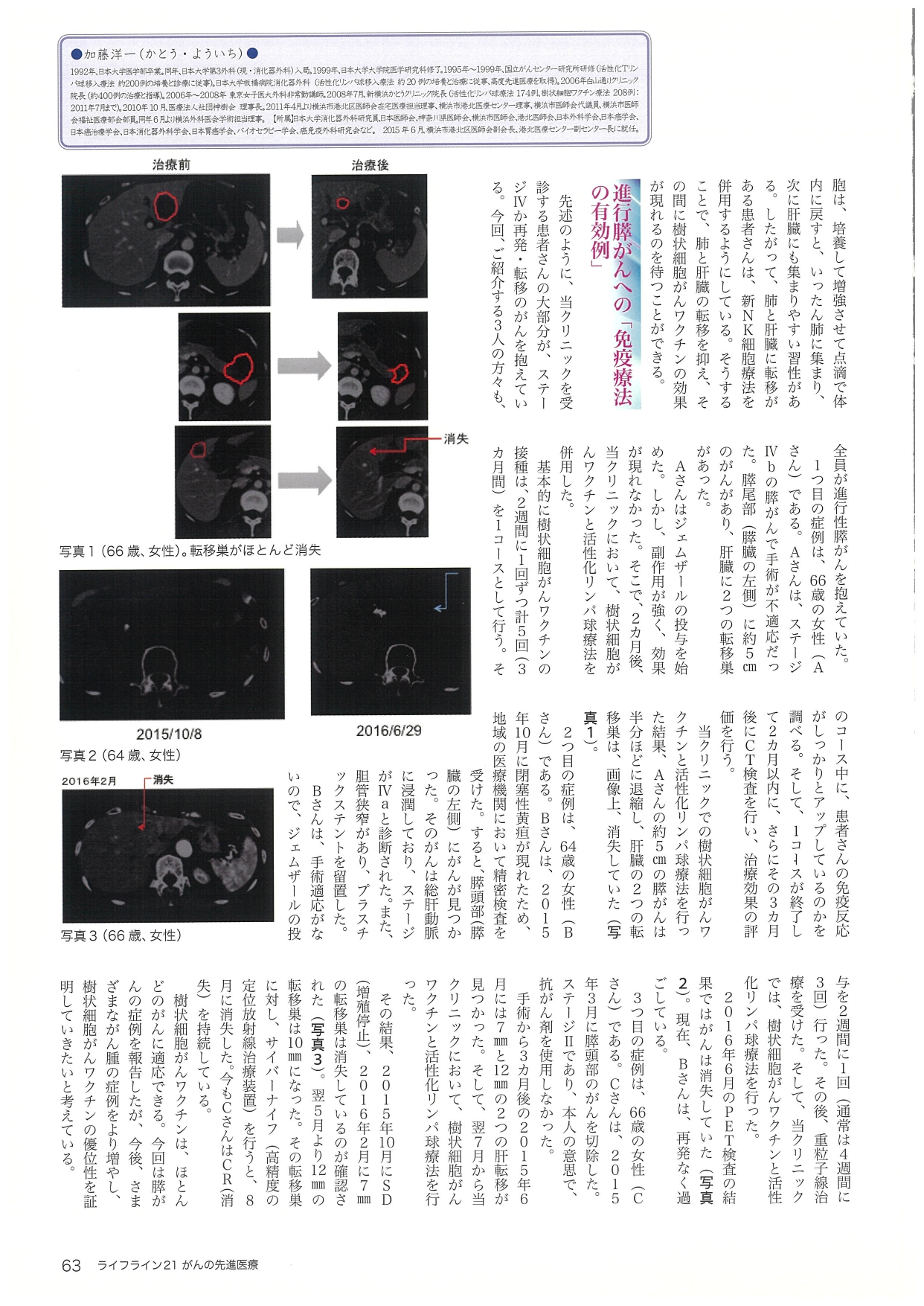
Below are three case studies of pancreatic cancer patients, accompanied by pre-and post-treatment CT images:
Patient A (66-year-old female): Post-treatment, metastatic lesions almost disappeared. CT scans from October 8, 2015, to June 29, 2016, showed significant tumor shrinkage. Using chemotherapy concurrently with immunotherapies such as DC vaccines and LAK lymphocyte transfusions, the patient’s tumors shrank substantially during the course of treatment.
Patient B (64-year-old female): Since 2015, multiple metastatic lesions have been discovered, including spread to the liver. However, after receiving combination therapy at the clinic—chemotherapy plus LAK lymphocyte transfusions—a 2016 evaluation in February indicated that some lesions had “disappeared” or “significantly shrunk.” Ongoing follow-ups have shown notable life extension and disease control benefits.
Patient C (66-year-old female): In May 2016, her tumor showed clear signs of progression. Thanks to the clinic’s treatment regimen, which included dendritic cell therapy and LAK lymphocyte transfusions, several lesions were brought under control to the point of being nearly undetectable. Although no definitive cure can be guaranteed yet, multiple therapy cycles have demonstrated the ability to keep the disease stable.